If you are exploring industrial 3D printing, you have likely encountered two similar-sounding technologies: SLS and SLM.
SLS stands for Selective Laser Sintering. SLM stands for Selective Laser Melting.They sound almost identical. Both use a laser. Both work with metal powder. But they are fundamentally different in how they process material and what kind of parts they produce.
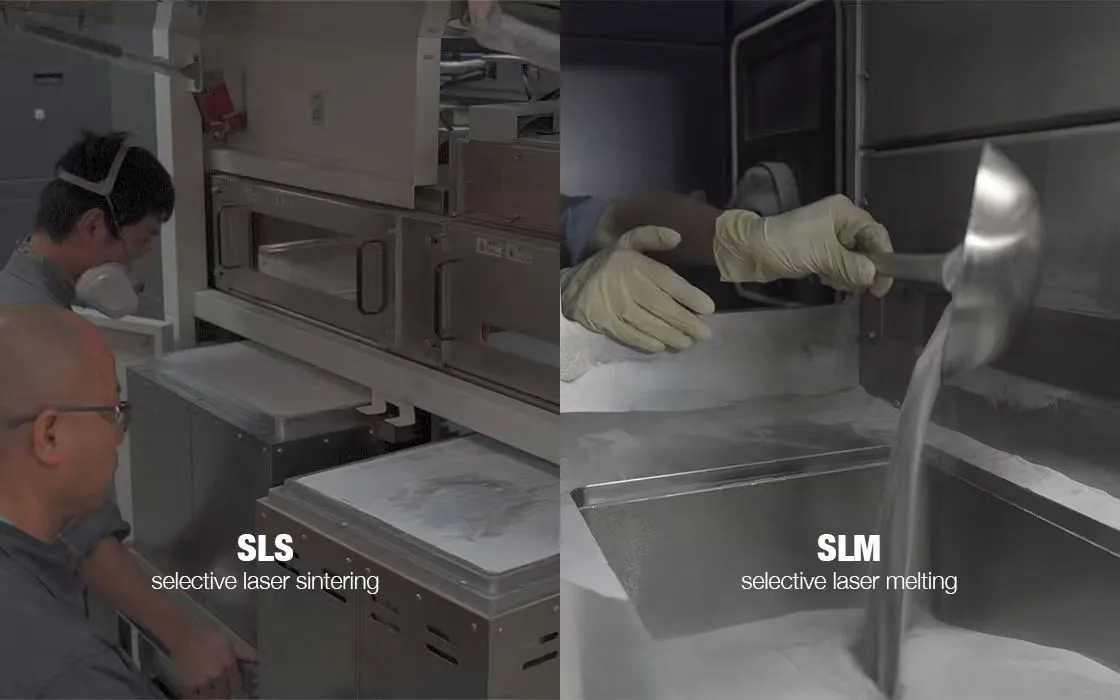
This guide will help you understand the differences between sls vs slm 3d printing. You will learn how each technology works, what materials they use, and which one is right for your application.
Whether you are looking for a 3d sls printer for prototyping or a sls metal 3d printer for production, this article will give you the answers you need.
What Is SLS 3D Printing?
SLS stands for Selective Laser Sintering. It was developed in the 1980s at the University of Texas.
How SLS Works
An sls 3d printer uses a laser to sinter powdered material. Sintering means heating the powder just enough to fuse the particles together at a surface level, without fully melting them.
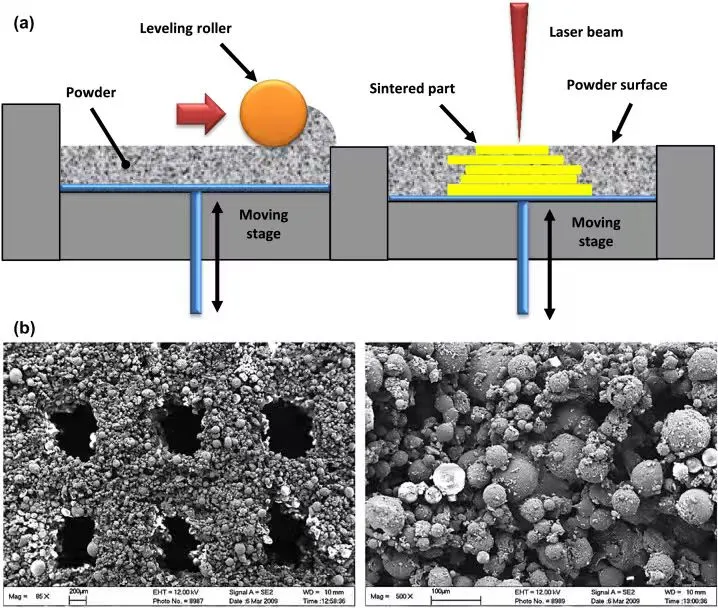
The process works like this.
A thin layer of powder is spread across a build platform. A laser traces the cross-section of the part, heating the powder until it fuses. The platform lowers by one layer height. A roller spreads fresh powder on top. The laser traces the next layer. This repeats until the print is complete.
Unused powder remains loose and supports the part during printing. This means no additional support structures are needed.
Materials Used in SLS
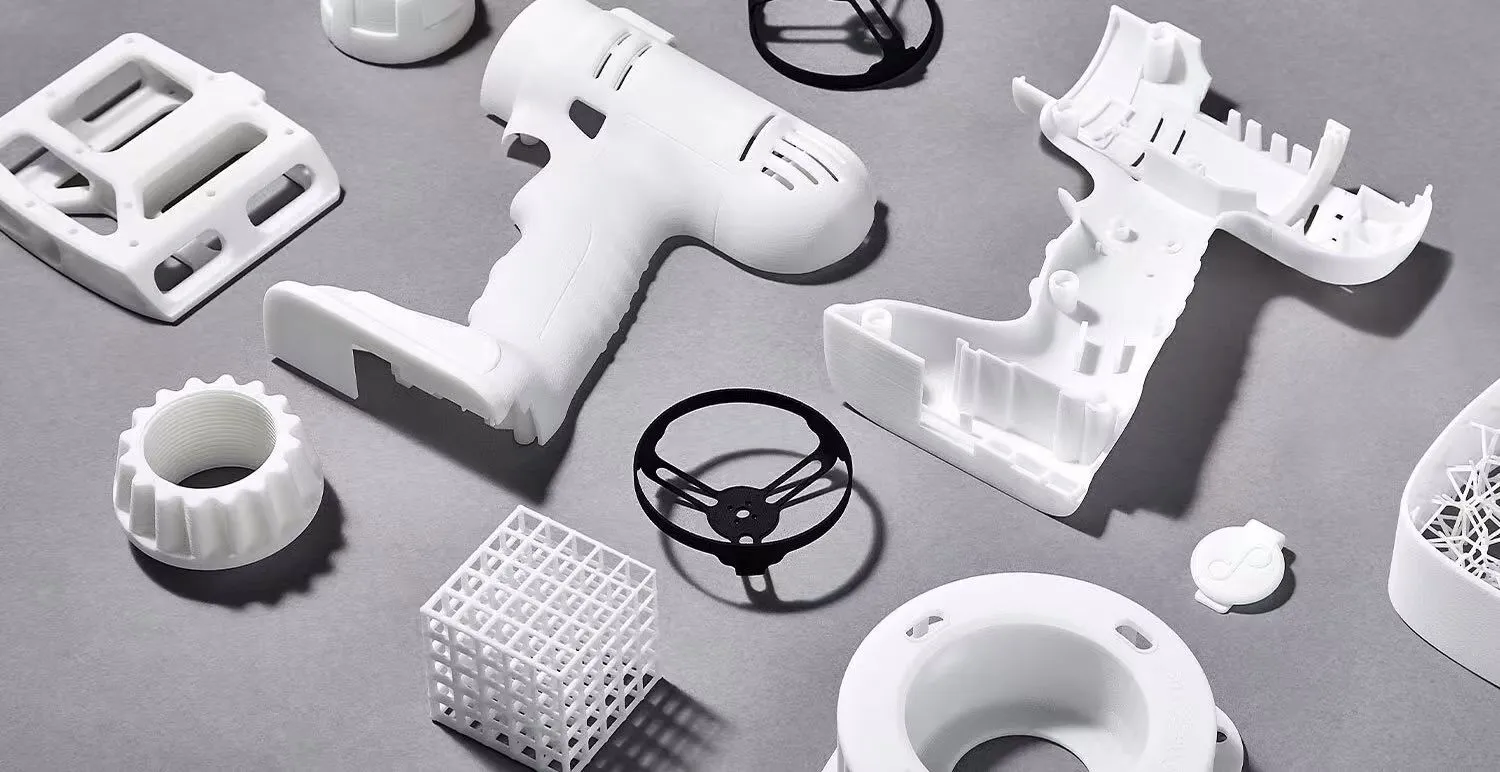
SLS is most commonly used with:
- Nylon (PA12, PA11)
- Glass-filled nylon
- Carbon fiber reinforced nylon
- TPU (flexible rubber-like material)
A standard sls 3d printer does not process metal. For metal parts, you need a different technology.
Common SLS Printers
Examples of SLS systems include:
- Formlabs Fuse 1 (desktop sls 3d printer)
- Sinterit Lisa series
- EOS Formiga series (industrial)
- 3D Systems ProX SLS series
If you are searching for a 3d sls printer for rapid prototyping or small batch production, these are good starting points.
What Is SLM 3D Printing?
SLM stands for Selective Laser Melting. It is also sometimes called DMLS (Direct Metal Laser Sintering), though there are technical differences.

How SLM Works
An sls metal 3d printer would be a misnomer. The correct term for metal laser printing is SLM or DMLS.
An SLM system uses a high-power laser to fully melt metal powder, not just sinter it. The melted powder fuses completely into a solid, fully dense metal part.
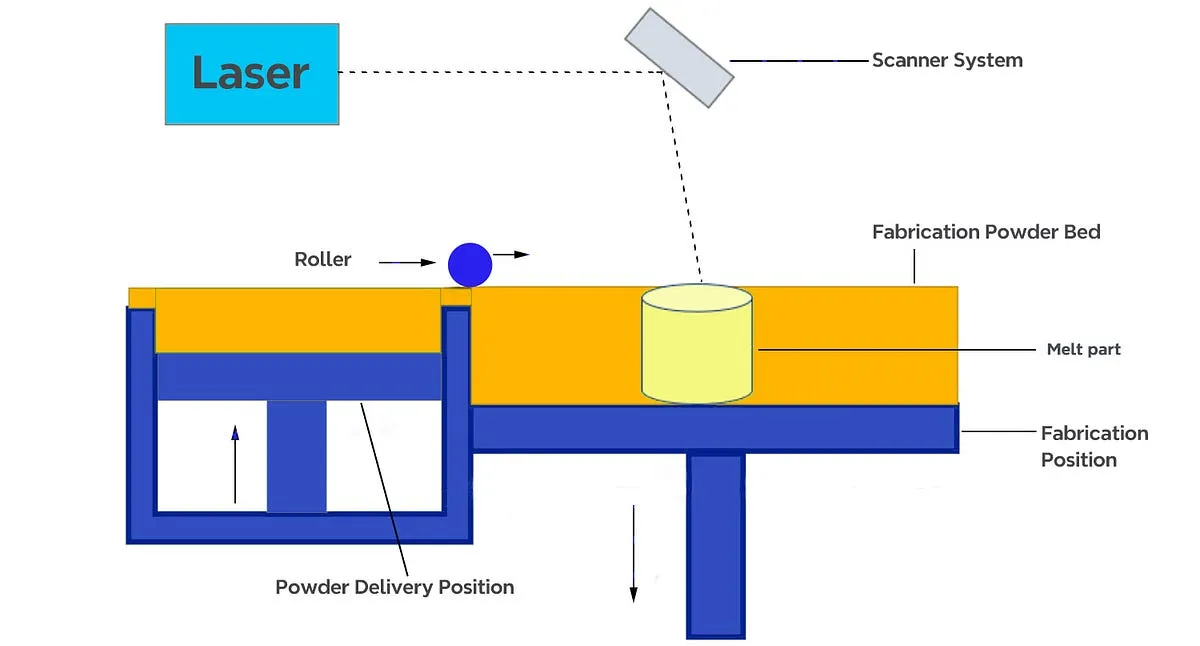
The process is similar to SLS in steps. A thin layer of metal powder is spread. A laser melts the powder completely. The platform lowers. Fresh powder is spread. The laser melts the next layer.
But because the powder is fully melted, SLM parts are much denser and stronger than sintered parts.
Materials Used in SLM
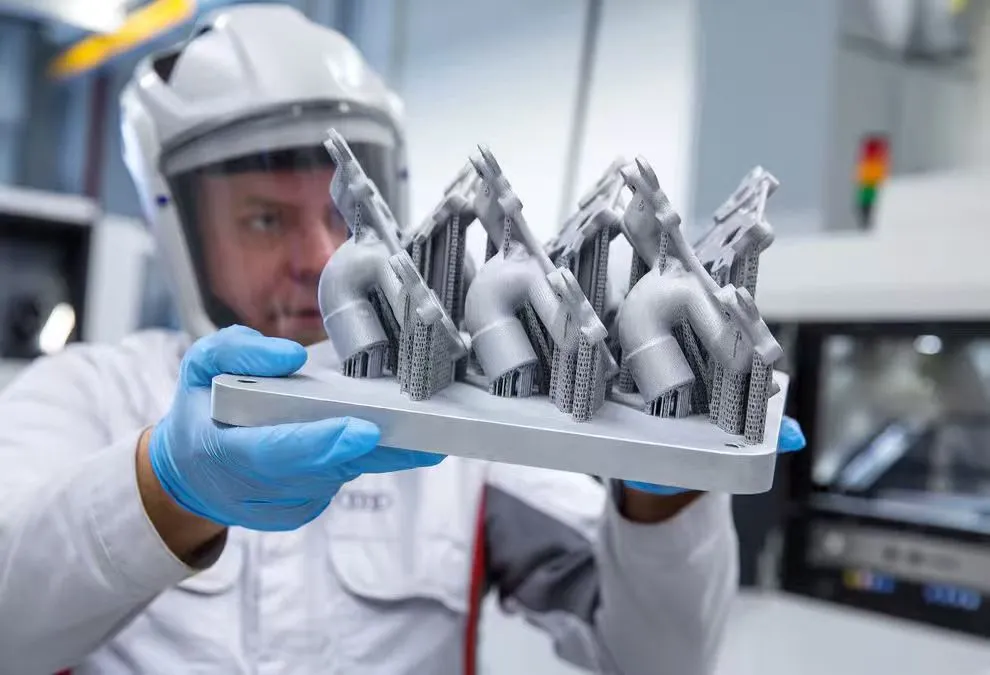
SLM works with a wide range of metals and alloys.
- Stainless steel (316L, 17-4 PH)
- Titanium (Ti6Al4V)
- Aluminum (AlSi10Mg, Al6061)
- Cobalt chrome
- Inconel (nickel superalloy)
- Tool steel (H13, Maraging steel)
If you need a sls metal 3d printer, what you actually want is an SLM or DMLS machine. The term is often used interchangeably in casual searches.
Common SLM Printers
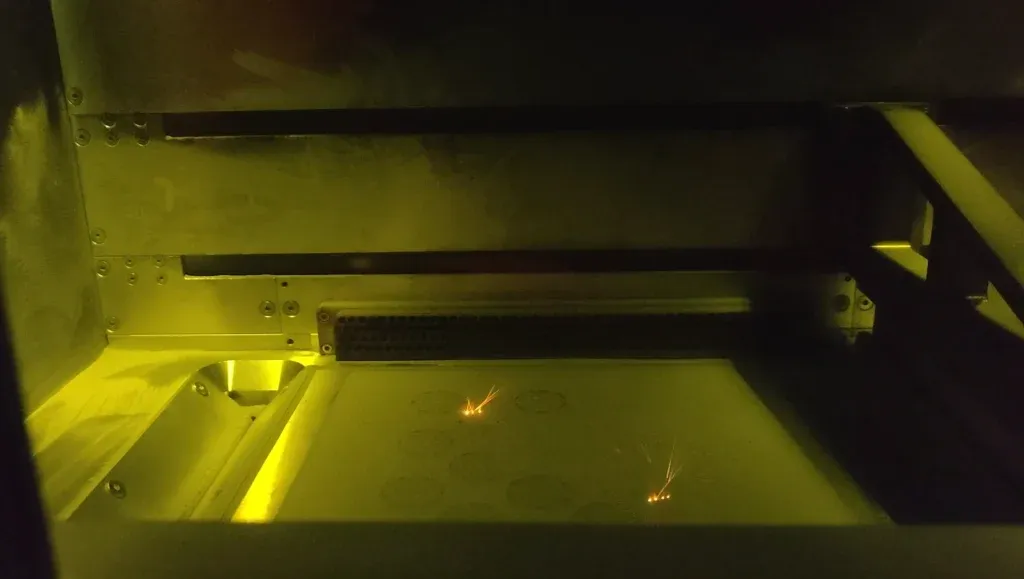
Examples of SLM systems include:
- EOS M series (M 100, M 290, M 400)
- SLM Solutions (SLM 125, SLM 280, SLM 800)
- Renishaw RenAM series
- Trumpf TruPrint series
- One Click Metal (entry-level metal)
These are industrial machines. Most cost well above $100,000.
Head-to-Head: SLS vs SLM 3D Printing
Now let us directly compare sls vs slm 3d printing across the most important factors.
Core Technical Difference
| Aspect | SLS | SLM |
| Process | Sintering (heating without melting) | Full melting |
| Final density | Porous (typically 90-98 percent dense) | Fully dense (99.9+ percent) |
| Part strength | Good for polymers, moderate for metals | Excellent for metals |
| Materials | Polymers, nylons, TPU | Metals and metal alloys |
This is the single most important difference between sls vs slm 3d printing. SLS binds particles at the surface. SLM fuses them completely.
Part Properties
| Property | SLS (Nylon) | SLM (Metal) |
| Tensile strength | 45-55 MPa | 500-1,200 MPa (depends on metal) |
| Elongation at break | 10-20 percent | 5-25 percent (depends on metal) |
| Surface finish | Slightly rough, can be polished | Rough as-printed, requires post-processing |
| Porosity | 2-10 percent | Less than 0.1 percent |
If you need a 3d sls printer for functional polymer parts, SLS is excellent. If you need metal parts that can bear load or withstand high temperatures, SLM is required.
Speed and Throughput
| Aspect | SLS | SLM |
| Layer height | 50-150 microns | 30-100 microns |
| Build speed | Moderate (depends on laser power) | Slow (high energy required for melting) |
| Batch processing | Excellent (nesting is common) | Good but limited by stress and warping |
SLS is generally faster for polymer parts. SLM is slower because full melting requires more energy per layer.
Cost Comparison
| Cost Factor | SLS | SLM |
| Powder removal | Required (blasting or brushing) | Required (complex internal channels hard to clean) |
| Support removal | Not needed (powder supports itself) | Required (metal parts need supports for overhangs) |
| Heat treatment | Optional (improves properties) | Often required (stress relief, annealing) |
| Surface finishing | Tumbling, dyeing, painting | Machining, polishing, bead blasting |
SLM requires significantly more post-processing than SLS. This adds time and cost.
Applications: When to Use SLS vs SLM
SLS Applications
A 3d sls printer is ideal for:
- Functional polymer prototypes
- End-use production of nylon parts (low to medium volume)
- Hinges, clips, and living hinges
- Medical devices and surgical guides (nylon)
- Drone frames and housings
- Custom tooling and jigs
If you need a sls 3d printer for prototyping, SLS delivers durable, functional parts without support structures.
SLM Applications
SLM (often searched as sls metal 3d printer) is used for:
- Aerospace components (brackets, fuel nozzles)
- Medical implants (titanium hip stems, spinal cages)
- Dental crowns and bridges (cobalt chrome)
- Heat exchangers and conformal cooling channels
- High-performance automotive parts
- Oil and gas tooling
If you search for sls vs slm for metal parts, the answer is SLM. SLS cannot produce fully dense metal parts.
Real-World Examples
| Application | Recommended Technology | Why |
| Nylon drone frame | SLS | Lightweight, strong, no supports needed |
| Titanium hip implant | SLM | Biocompatible, fully dense, patient-specific |
| TPU flexible seal | SLS | Rubber-like material, SLS handles TPU well |
| Stainless steel manifold | SLM | High pressure, complex internal channels |
| Engineering prototype (plastic) | SLS | Durable, functional testing |
SLS vs SLM: Which Is Better for Your Needs?
There is no single winner in the sls vs slm 3d printing debate. The right choice depends entirely on what you need to make.
Choose SLS if:
- You need plastic or polymer parts
- You want to print without support structures
- You need functional prototypes or end-use nylon parts
- Your budget is under $50,000 for the printer
- You want a 3d sls printer for rapid prototyping
Choose SLM if:
- You need metal parts
- Those parts must be fully dense and strong
- You can invest $150,000 or more
- You have the facilities for inert gas and post-processing
- You are searching for a sls metal 3d printer (but actually need SLM)
Consider Both if:
- You are a service bureau or contract manufacturer
- You need to offer both polymer and metal parts
- You have the budget and floor space for two systems
Common Misconceptions About SLS and SLM
Myth 1: SLS and SLM are the same technology
False. SLS sinters powder without melting. SLM fully melts powder. The difference in part density and strength is significant.
Myth 2: You can print metal on an sls 3d printer
False. Standard SLS printers are designed for polymers. Metal powder requires much higher laser energy and a controlled inert atmosphere.
Myth 3: SLM parts do not need post-processing
False. SLM parts almost always need heat treatment to relieve residual stresses. They also need support removal and often machining for critical surfaces.
Myth 4: Desktop SLS printers are as good as industrial ones
False. Desktop sls 3d printer systems (like Formlabs Fuse 1) are excellent for small parts and prototyping. But industrial systems offer larger build volumes, more materials, and higher throughput.
Frequently Asked Questions
What is the difference between sls vs slm 3d printing?
SLS sinters powder (heats without melting). SLM fully melts powder. SLS is for polymers. SLM is for metals.
Is there a sls metal 3d printer?
Technically, no. The correct term for metal laser printing is SLM or DMLS. Many people search for sls metal 3d printer when they actually need an SLM machine.
Which is more expensive, SLS or SLM?
SLM is significantly more expensive. A desktop sls 3d printer can cost $10,000 to $30,000. An entry-level SLM system starts around $100,000 and goes up to $1,000,000 or more.
Can I use both SLS and SLM in one printer?
No. SLS and SLM require different laser powers, different atmospheres, and different material handling systems. They are separate machines.
What is the best 3d sls printer for beginners?
The Formlabs Fuse 1 is the most popular desktop sls 3d printer for beginners. The Sinterit Lisa series is another good option.
How much does sls 3d printing cost per part?
Cost depends on part size, volume, and material. For nylon, a typical sls 3d print cost ranges from $1 to $10 per cubic centimeter, including materials and labor.
What is the difference between SLM and DMLS?
DMLS (Direct Metal Laser Sintering) is a trademarked term from EOS. In practice, DMLS and SLM are nearly identical. Both fully melt metal powder. Most engineers use the terms interchangeably.
Conclusion
Understanding the difference between sls vs slm 3d printing is essential for anyone buying industrial additive manufacturing equipment.
Here is a quick summary.
SLS is for polymers. It sinters powder without full melting. Parts are porous but strong enough for most functional applications. A 3d sls printer is accessible for small businesses and engineering teams.
SLM is for metals. It fully melts powder into fully dense parts. Strength is near that of wrought metal. But equipment and operating costs are high.
If you search for sls metal 3d printer, what you actually want is an SLM or DMLS machine. But if you need plastic parts that are durable and support-free, SLS is the right choice.
Now you have the information you need to decide.