The additive manufacturing industry has reached a pivotal moment. After years of promise and experimentation, 2026 marks a decisive shift from what’s possible to what’s proven .
Industrial 3D printing is no longer confined to prototyping labs. It is becoming a reliable, production-ready manufacturing technology across aerospace, automotive, healthcare, and defense. The market is projected to grow from USD 20.13 billion in 2026 to USD 28.99 billion by 2032, at a CAGR of 6.24%.
This article explores the key industrial 3D printing trends shaping 2026. You will learn about the shift to production, the role of AI and automation, advances in materials, and how supply chains are being transformed.
The Shift from Prototyping to Production
Perhaps the most significant trend in 2026 is the maturation of additive manufacturing into a production technology.
Beyond Prototyping
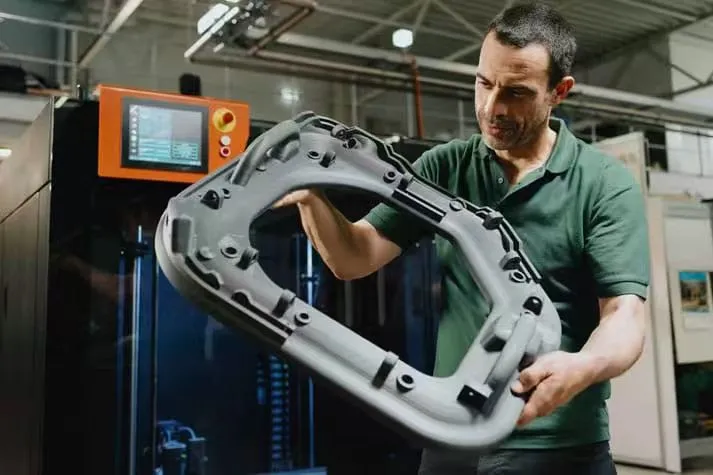
For years, 3D printing was primarily an R&D tool for design validation and concept testing. That is changing rapidly. Manufacturers are now deploying additive workflows for tools, fixtures, service parts, and increasingly, end-use production components.
Advances in industrial polymer platforms address long-standing concerns about speed, repeatability, and process stability. As a result, additive manufacturing is meeting production requirements more reliably than ever before.
Low-Volume, High-Value Production
“Production” in 2026 does not necessarily mean mass manufacturing. It means low-volume, high-value applications where manufacturers need reliable parts fast.
Additive manufacturing enables production of lightweight aerospace brackets, rail interior components, injection mould tooling, production jigs, and patient-specific medical guides — all without the cost and lead time of traditional tooling.
AI and Software as the Industrial Backbone
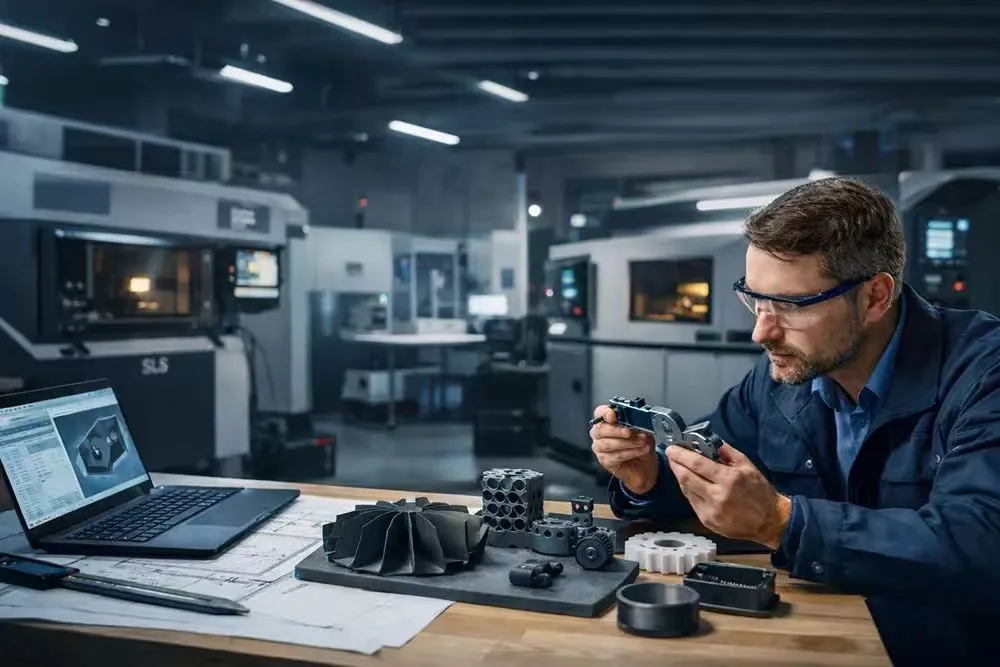
Artificial intelligence and software are becoming the “glue” that holds industrial additive manufacturing together.
AI-Driven Generative Design
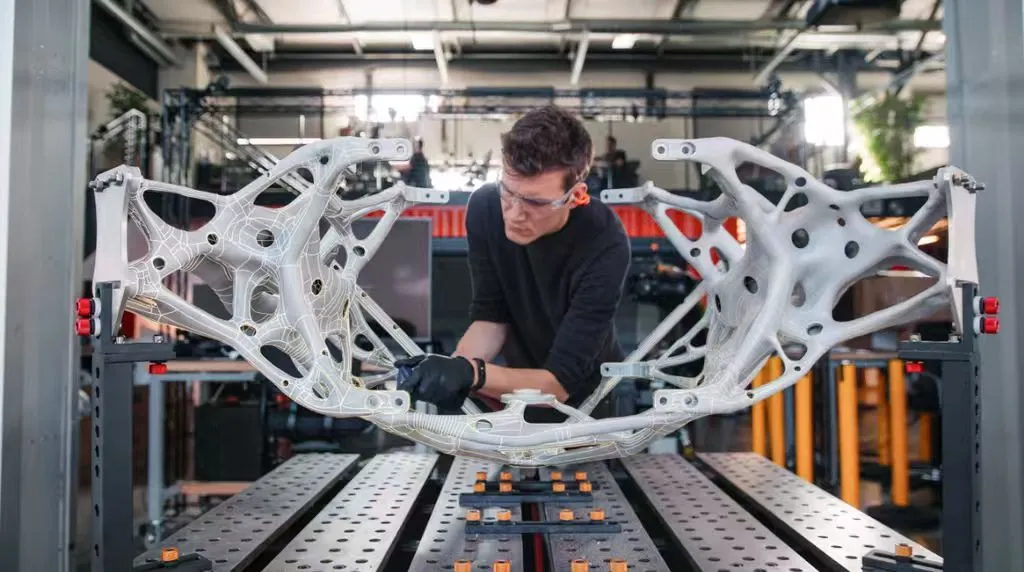
AI agents now take functional requirements — weight, stress, heat — and “grow” the most efficient geometry. These organic, lattice-heavy designs are often impossible to make via traditional methods but can offer 40 to 60 percent weight reduction.
Generative design tools are transforming how engineers approach part design, generating multiple optimized solutions based on constraints and performance requirements.
In-Situ Monitoring and “Born-Qualified” Parts
Sensors now analyze every melt pool and layer in real-time. If a defect is detected, the system self-corrects. Parts emerge from the printer already meeting certification standards — a concept known as “born-qualified” parts.
This shift reduces the “certainty tax,” the high cost and time required to qualify new materials or complex internal geometries. As one expert noted, “you can’t hallucinate your way to qualification and certification” — but AI can help get process parameters and quality assurance to the required level.
Software as the Differentiator
Software is playing an increasingly larger part in overall production, driving up quality and efficiency while reducing total cost of ownership. Orchestration agents now handle automated quoting, job scheduling, and remote diagnostics — creating a seamless “digital thread” that ensures consistency across multiple production sites.
Materials Driving Industrial Adoption
Materials are the real growth engine behind additive manufacturing’s industrial future.
Certified Materials for Production
One of the biggest trends in 2026 is the growing importance of certified materials. As more industries use additive manufacturing for end-use parts, confidence and compliance are becoming essential.
Certified materials are tested and validated against recognized industry standards, giving manufacturers confidence that parts will perform exactly as expected.
Smaller, specialized suppliers are increasingly focusing on material certifications — new resins for food contact, medical applications, flame retardancy, and toy manufacturing are coming to market monthly.
High-Performance Polymers
Advances in engineered polymers and powder materials offer performance characteristics that support a broader range of production and regulated applications. From high-strength lightweight materials to heat-resistant and biocompatible options, the material ecosystem is expanding rapidly.
Application-Led Material Development
Materials development is becoming increasingly application-led rather than speculative. Manufacturers can now select materials based on application requirements rather than design limitations, enabling stronger, more reliable parts for real-world applications.
Supply Chain Transformation and Digital Inventories
Global supply chains remain vulnerable to geopolitical uncertainty, tariff exposure, and rising logistics costs. In 2026, additive manufacturing is playing a central role in supply chain transformation.
Digital Part Files Replace Physical Inventory
Qualified digital part files can replace physical warehouses in many cases. Manufacturers can produce parts closer to the point of use, on demand, reducing transportation complexity and shortening lead times.
This approach allows organizations to reduce risk while maintaining consistent quality, positioning additive manufacturing as a dependable component of modern supply chain strategy.
Localized Production and Resilience
Additive manufacturing enables distributed production models. A part needed in Singapore or Sao Paulo can be printed locally from an encrypted digital file — eliminating lead times and slashing transportation carbon footprints.
Companies are increasingly using digital inventories and localized production to reduce physical stock, shorten lead times, and improve supply chain resilience.
Defense and Aerospace as Growth Drivers
Defense demand is emerging as a forcing function for additive manufacturing adoption — not just for spend, but for qualification discipline and distributed manufacturing playbooks.
Accelerated Adoption in Defense
As defense departments and unmanned vehicle manufacturers scale their programs, technologies like SLS are seeing accelerated adoption — not only for their ability to scale production output, but also for delivering part performance required for demanding use cases.
Rapid iteration, secure supply chains, and distributed manufacturing requirements are accelerating investment in additive manufacturing capabilities, with spillover effects into adjacent segments including aerospace.
Certification and Qualification
Defense programs demand rigorous certification. The joint additive qualification for sustainment program is working with additive manufacturers to establish common qualification standards, making them dependable sources of supply for the Department of Defense.
The Artemis II mission, featuring over 100 additive manufacturing parts, demonstrates that certified, production-ready AM components are now flying in critical applications.
The Rise of Print Farms and Scalable Production
In 2026, additive manufacturing is seeing the emergence of interconnected production clusters.
Print Farms Replace Isolated Machines
Companies are deploying fleets of multiple high-speed, mid-range printers that act as a single, flexible production line. This “swarm” approach offers better redundancy and higher throughput than traditional mass manufacturing for small-to-medium batches.
Cost Per Part Continues to Decline
Cost-per-part on powder-bed systems continues its steady decline — an inflection that is unlocking a new wave of production adoption. This momentum is driven by cumulative gains in both process efficiency and materials maturity.
Vertical Solutions and Industry-Specific Applications
Growth in 2026 is being driven by vertically focused applications.
Aerospace and Automotive
Aerospace organizations require certified processes for tooling, fixtures, and select production components. Automotive manufacturers rely on additive manufacturing for assembly aids, end-of-arm tooling, and service parts that support flexible production.
Healthcare
Healthcare continues to advance toward personalized, regulatory-ready applications where consistency and traceability are essential. Additive manufacturing is increasingly used for surgical guides, implants, and prosthetics.
Orthotics and Prosthetics
The orthotics and prosthetics sector is experiencing strong growth, with service bureaus expanding their installed base to meet growing demand for customized, rapidly iterated devices.
Frequently Asked Questions
What are the biggest additive manufacturing trends in 2026?
The biggest trends include the shift from prototyping to production, AI-driven design and process control, certified materials for end-use parts, digital inventories for supply chain resilience, and defense-driven adoption of SLS and other polymer technologies.
How is AI being used in additive manufacturing today?
AI is used for generative design, in-situ process monitoring, material selection, job scheduling, and quality assurance. It enables engineers to move from data to decisions in minutes and solve complex problems faster.
Why are certified materials important in 2026?
Certified materials have been tested and validated against industry standards, giving manufacturers confidence that parts will perform as expected. This unlocks additive manufacturing for end-use production, not just prototyping.
What is the industrial 3D printing market forecast?
The industrial 3D printing market is projected to reach USD 20.13 billion in 2026 and grow to USD 28.99 billion by 2032 at a CAGR of 6.24%.
How is additive manufacturing changing supply chains?
Additive manufacturing enables localized, on-demand production through digital inventories. Qualified digital part files replace physical warehouses, allowing manufacturers to produce parts closer to the point of use, reducing lead times and improving supply chain resilience.
Is SLS still relevant in 2026?
Yes. SLS is seeing accelerated adoption driven by defense and unmanned vehicle programs. It is valued for its ability to scale production output and deliver the part performance required for demanding applications.
Conclusion
2026 is a defining year for industrial additive manufacturing. The industry is moving decisively from what’s possible to what’s proven.
The key trends shaping this shift are clear:
- Additive manufacturing is becoming a production-ready technology, not just a prototyping tool
- AI and software are enabling intelligent, self-correcting manufacturing processes
- Certified materials are unlocking end-use applications across regulated industries
- Digital inventories and localized production are transforming supply chains
- Defense and aerospace demand is accelerating adoption and qualification
For manufacturers, the message is clear: additive manufacturing is no longer experimental. It is a strategic capability that delivers speed, flexibility, and resilience.