Automotive interior components must balance multiple demands. They need to be durable enough for daily use, comfortable for occupants, visually appealing, and cost-effective to produce. Among these components, armrests are particularly important — they are touched and used constantly, making them a key touchpoint for perceived vehicle quality.
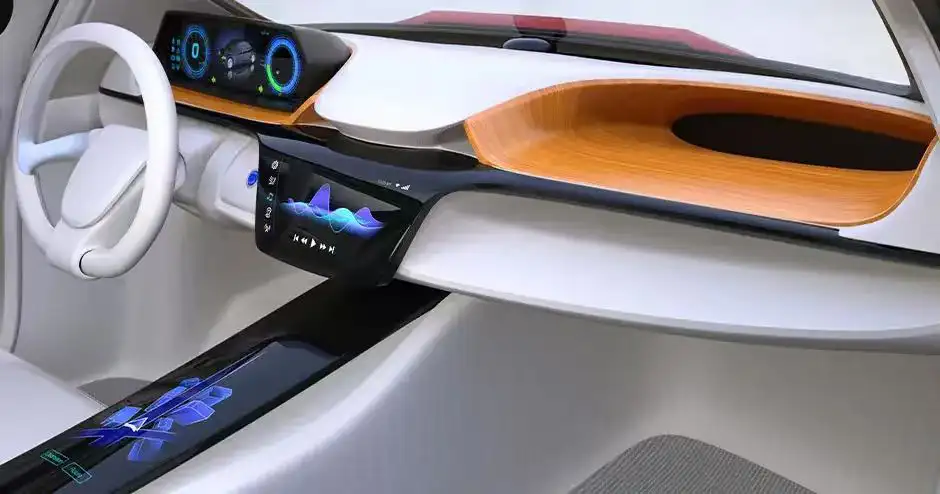
Selective Laser Sintering (SLS) is emerging as a compelling manufacturing solution for automotive interior armrests. Unlike traditional injection molding, SLS offers design freedom, eliminates tooling costs, and enables customization without compromising mechanical performance.
This article explores how SLS 3D printing is transforming armrest manufacturing, with a focus on the Zongheng3D Supermaker SLS3540 Pro and its capabilities for interior component production.
Why SLS for Automotive Interior Armrests?
The automotive industry is shifting toward personalized interiors and more sustainable production methods. SLS technology aligns with these trends by offering several distinct advantages for armrest manufacturing.
Design Freedom for Ergonomics and Aesthetics
SLS enables geometries that are difficult or impossible with traditional manufacturing. For armrests, this means:
Ergonomic optimization: Organic curves and contours that match human anatomy
Complex surface textures: Custom grip patterns and aesthetic finishes
Integrated features: Airflow channels, mounting points, and reinforcement ribs printed as a single part
Unlike injection molding, which requires expensive tool modifications for design changes, SLS allows engineers to iterate designs quickly and cost-effectively.
Lightweighting Without Compromising Strength
Lightweighting is a strategic priority in automotive manufacturing, directly impacting fuel efficiency and range in electric vehicles. SLS supports lightweighting through:
Lattice structures: Internal cellular geometries that reduce weight while maintaining strength
Topology optimization: Material placed only where structurally needed
Material properties: PA12 nylon offers an excellent strength-to-weight ratio
Research shows that SLS can achieve weight reductions of 30% or more in interior components compared to traditional designs.
No Tooling, Faster Time-to-Market
One of SLS’s most significant advantages is the elimination of tooling costs. Traditional injection molding requires expensive molds that can take weeks or months to produce. SLS prints parts directly from CAD data, compressing development cycles dramatically.
A Japanese aftermarket parts manufacturer, Axis, reduced its development cycle from six months to approximately one month after adopting SLS printing.
Material Options for Interior Applications
SLS supports a range of materials suitable for automotive interior applications:
| Material | Key Properties | Armrest Application |
| PA12 Nylon | Tough, lightweight, good surface finish | Structural core, visible surfaces |
| PA11 (Bio-based) | Sustainable, flexible | Eco-friendly armrest designs |
| Glass-filled PA12 | Enhanced stiffness, thermal resistance | High-stress mounting points |
| TPU | Flexible, resilient | Soft-touch surfaces, cushioning layers |
The availability of bio-based materials like PA11, as used by Alpine in its A390_β electric vehicle, also supports sustainability goals.
The SLS3540 Pro: Designed for Interior Component Production
The Zongheng3D Supermaker SLS3540 Pro is an industrial SLS printer well-suited for automotive interior applications.
Key Specifications
| Specification | SLS3540Pro |
| Build volume | 350 x 350 x 400 mm |
| Laser type | 100W fiber laser/ 60W CO2 Laser |
| Layer thickness | 0.06 – 0.3 mm |
| Max scanning speed | 15 m/s |
| Max chamber temperature | 230°C |
| Applications | Automotive, electronics, manufacturing, aerospace |
Why the SLS3540 Pro Excels for Armrest Manufacturing
Large Build Volume: The 350 x 350 x 400 mm build capacity accommodates multiple armrest components in a single batch. Multiple parts can be nested in a single build — drastically reducing per-part cost and enabling rapid turnaround for both prototyping and production orders.
High Dimensional Accuracy: Layer thickness as low as 0.06 mm ensures precision fit for mounting points, hinge mechanisms, and assembly interfaces.
Support-Free Complex Geometry: SLS uses a powder bed that naturally supports parts during printing. This enables complex internal features without post-processing support removal — a distinct advantage over technologies like FDM or SLA.
Material Versatility: The SLS3540 Pro supports engineering-grade nylons including PA12, glass-filled PA12, and TPU. This allows for multi-material strategies: rigid PA12 for structural cores and TPU for soft-touch surfaces.
Production-Ready Output: SLS parts from the SLS3540 Pro can serve as low-volume production components, not just prototypes. This is increasingly valuable for EV startups, specialty vehicle builders, and aftermarket parts manufacturers where tooling costs are prohibitive.
Real-World Armrest Applications
SLS technology is already being used in automotive interior applications, including armrests and related components.
Brose Seat Suspension Components
Brose, a major automotive supplier, uses both SLA and SLS printers for prototyping and production. For a seat suspension mat prototype, the team printed connection tubing in Nylon 12 GF Powder on their SLS printers. The combination of SLS and SLA allowed them to design, test, and iterate without tooling or outsourcing.
As Matthias Schulz, Manager of Seat Prototyping at Brose North America, explained: “An overmold tool is very complex and expensive, so we designed the parts to snap over the wire for the SLS.”
Custom Interior Panels for Aftermarket
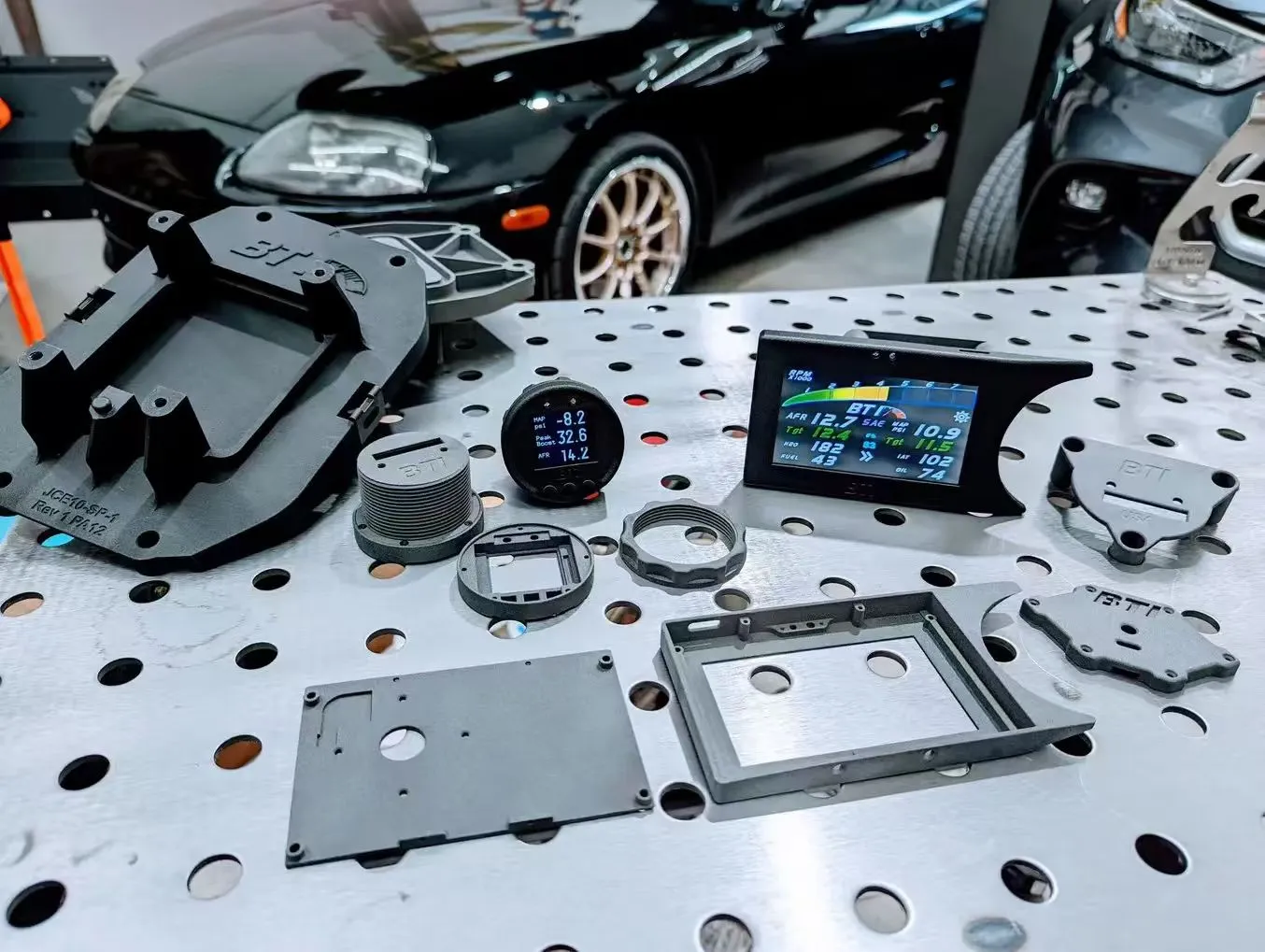
Axis, a Japanese aftermarket parts manufacturer, uses SLS to produce vehicle-specific custom interior panels and smartphone holders. Each product is designed specifically for a particular vehicle model’s dashboard geometry.
The Fuse 1+ 30W SLS printer enables them to:
- Scan vehicle interiors to capture complex geometry
- Design custom-fit parts in CAD
- Print functional prototypes and production parts without molds
- Reduce development time from six months to one month
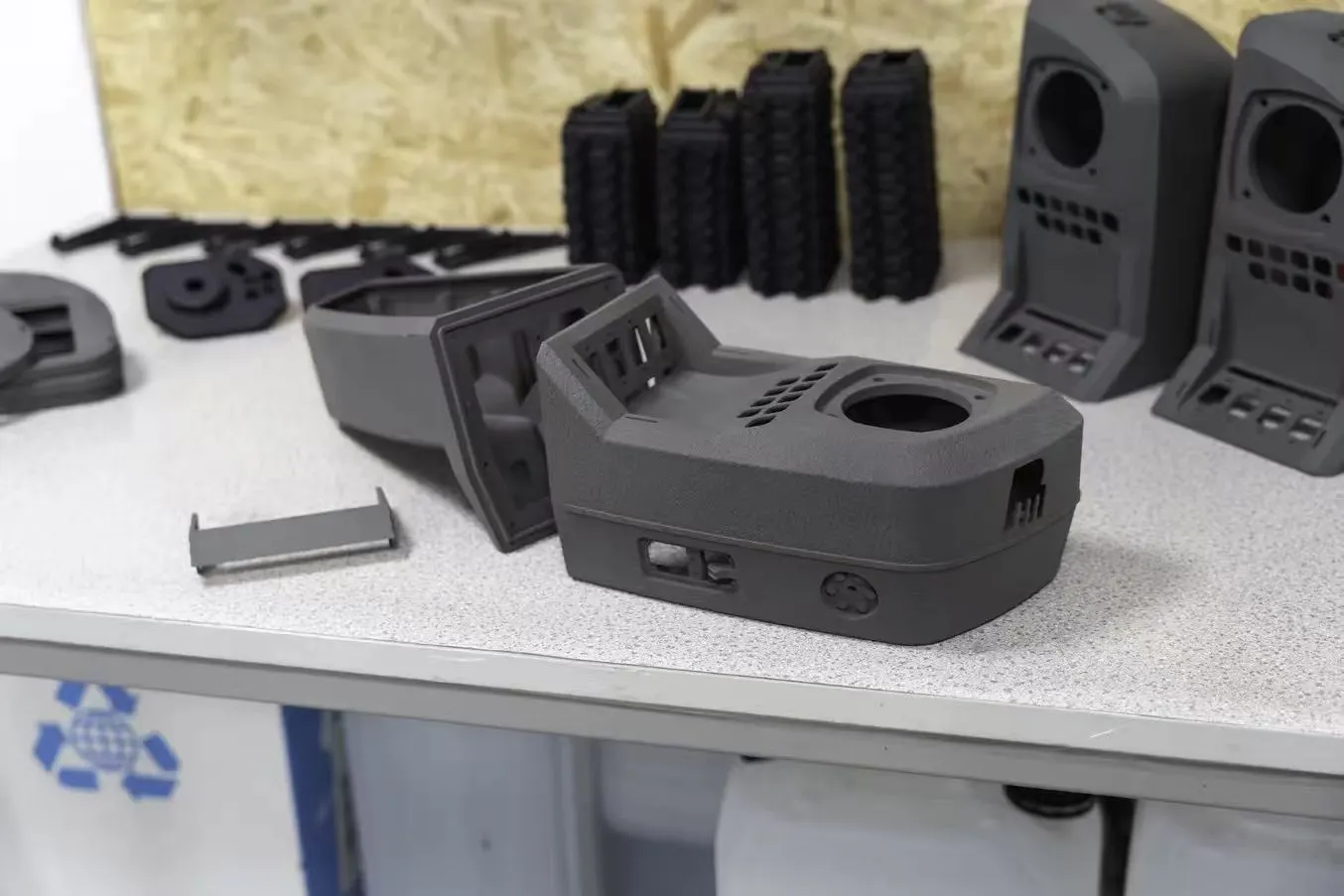
Formula Student Racing Components
Formula Student teams use SLS for interior components that must withstand rigorous conditions. The SAE Racing Team at Munich University uses PA12 printed housings and spacers that stabilize battery cells in their electric racing car.
The team noted that PA12 offers the best mechanical properties for their purposes, including high dielectric strength — a critical safety requirement in electric vehicles.
Design Considerations for SLS Armrests
Surface Finish and Tactile Quality
Armrests are visible and tactile components. While SLS parts have a characteristic grainy matte texture, post-processing options can enhance surface quality:
- Bead-blasting: Creates uniform matte finish
- Vapor smoothing: Improves sealing, cleanability, and perceived quality
- Dyeing: Adds color while maintaining surface texture
Structural Integrity
Armrests must withstand repeated use and occasional heavy loads. PA12 provides:
- Excellent elongation and fatigue behavior for long-term durability
- Heat deflection temperature sufficient for cabin environments
- Chemical resistance to oils and cleaning agents
Integration with Other Systems
Modern armrests often integrate electronics (USB ports, controls), ventilation, and mechanical hinges. SLS’s ability to print complex internal features and integrated mounting points simplifies assembly and reduces parts count.

Can SLS print soft-touch armrest surfaces?
Yes. TPU (Thermoplastic Polyurethane) can be printed on SLS systems for flexible, resilient surfaces. Alternatively, rigid SLS-printed armrests can be overmolded or wrapped with soft materials post-processing.
How does SLS compare to injection molding for armrests?
For low to medium volumes (under a few thousand units), SLS is often more cost-effective because it eliminates tooling costs. For mass production, injection molding remains more economical. SLS is ideal for prototyping, pilot runs, and niche production.
Are SLS-printed armrests durable enough for daily use?
Yes. PA12 nylon offers excellent impact resistance, fatigue behavior, and dimensional stability. SLS components are being used in production automotive applications by major suppliers and manufacturers.
Can SLS armrests be customized for different vehicle models?
Yes. SLS enables rapid design changes without tooling modifications. This makes it ideal for vehicle-specific aftermarket parts and customized interior components.
What post-processing is needed for visible interior parts?
SLS parts typically require powder removal (bead-blasting) and optional dyeing or vapor smoothing for visible interior applications. These processes give SLS parts a professional, production-quality finish.
Conclusion
SLS 3D printing is transforming the manufacturing of automotive interior armrests by enabling lightweight designs, complex ergonomic features, and production without tooling costs.
The Zongheng3D Supermaker SLS3540 Pro offers the precision, build volume, and material versatility required for armrest production. With its 350 x 350 x 430 mm build capacity, 50W fiber laser, and support for engineering-grade nylon materials, it can handle both prototyping and small-batch production runs of interior components.
As the automotive industry continues to personalize interiors and accelerate development cycles, SLS will play an increasingly central role in helping manufacturers deliver comfortable, durable, and customized armrest solutions.