Electronic display housings are everywhere. From weighbridge indicators to industrial control panels, these enclosures protect sensitive electronics while providing a user interface that operators interact with daily. They must be durable, dimensionally accurate, and often need to withstand harsh environments.
Traditional manufacturing methods like injection molding and CNC machining have long been the default choices for producing electronic enclosures. But Selective Laser Sintering (SLS) is rapidly emerging as a viable alternative — not just for prototyping, but for low-volume production.
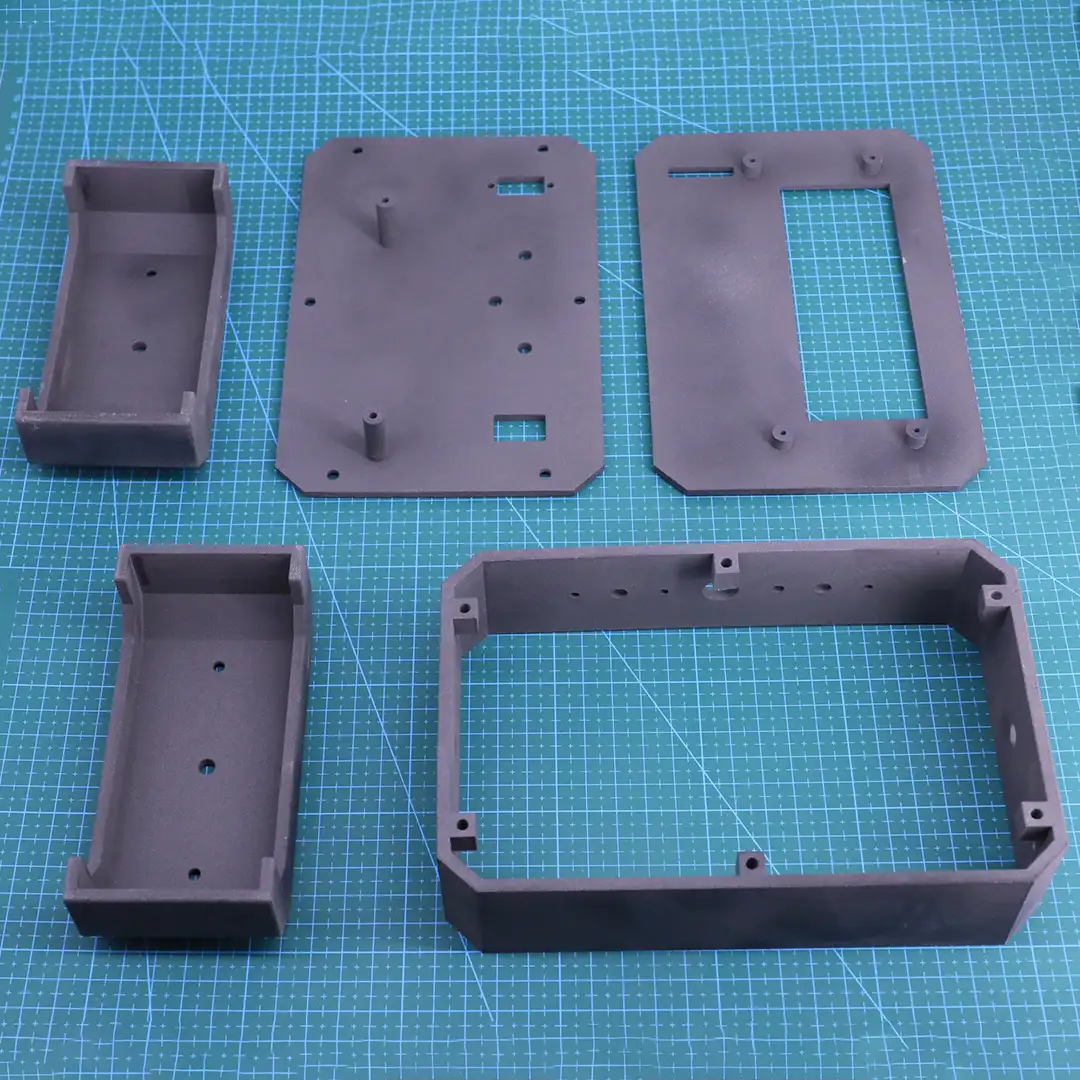
Recently, Zongheng3D used the Zongheng3D SLS3540 Pro industrial 3D printer to produce a prototype electronic display housing for a weighbridge scale. This article explores the project, the technology behind it, and the broader implications for electronic enclosure manufacturing.
The SLS3540 Pro: Built for Electronic Enclosure Production
The Zongheng3D SLS3540 Pro is an industrial-grade SLS printer designed for high-precision, high-throughput manufacturing. Key specifications relevant to electronic enclosure manufacturing include:
| Specification | SLS3540Pro |
| Build volume | 350 x 350 x 400 mm |
| Laser type | 100W fiber laser /60W CO2 laser |
| Layer thickness | 0.06 – 0.3 mm |
| Max scanning speed | 15 m/s |
| Max chamber temperature | 280°C |
| Weight | 750 kg |
| Applications | Automotive, electronics, manufacturing, aerospace |
The SLS3540 Pro was designed for high efficiency and yield. Its generous build volume allows for nesting multiple parts in a single batch — drastically reducing per-part cost and enabling rapid turnaround for both prototyping and production orders.
For electronic enclosure applications, the SLS3540 Pro offers several critical advantages:
- High dimensional accuracy: Layer thickness down to 0.06 mm ensures precision fit for electronics assemblies
- Support-free printing: Complex internal features without post-processing support removal
- Material versatility: Supports PA12, glass-filled nylon, and TPU — all suitable for electronic housings
- Batch production capability: Multiple enclosures can be nested per build for production runs
The Weighbridge Display Housing Project
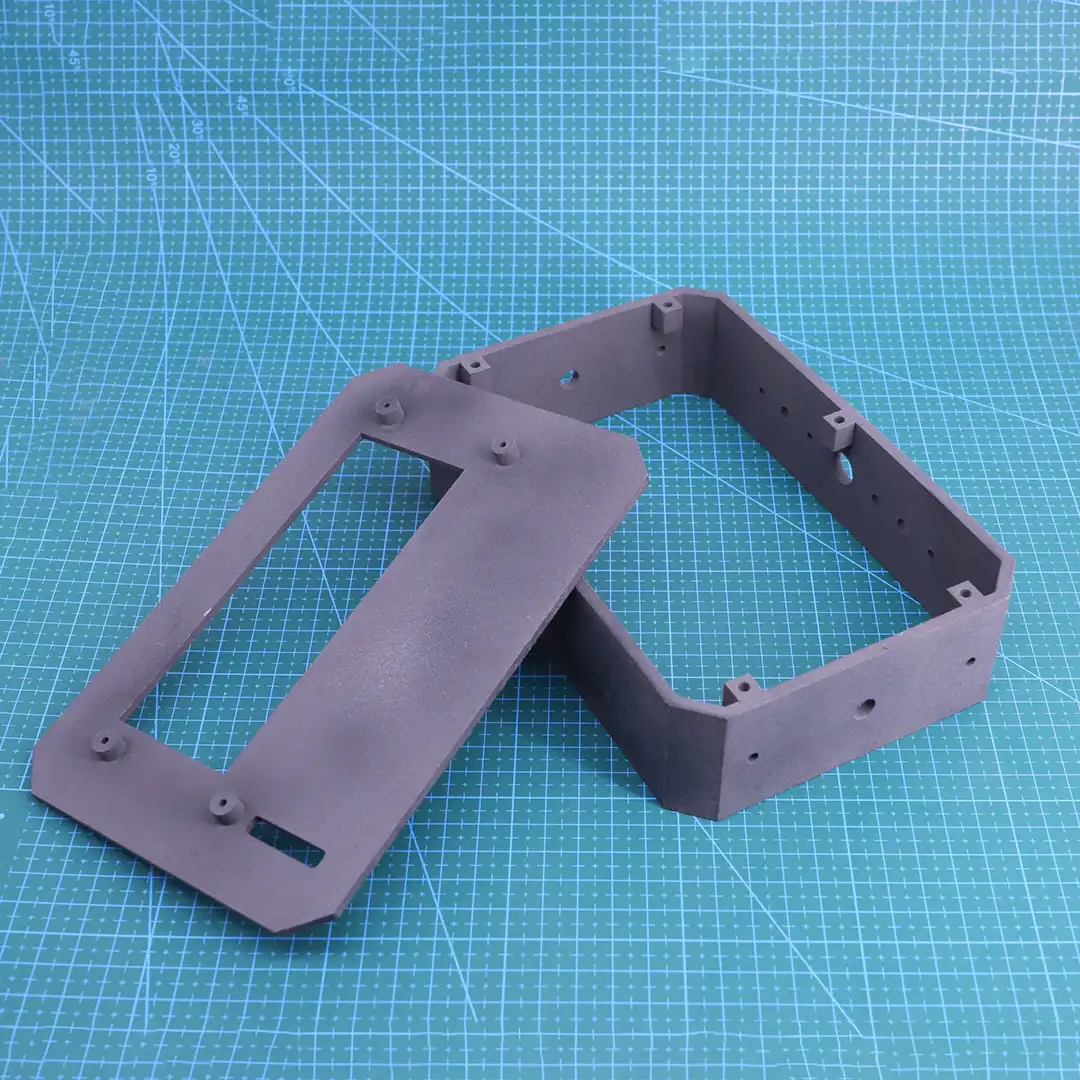
Zongheng3D recently completed a prototype project using the SLS3540 Pro to print an electronic display housing for a weighbridge scale — an industrial weighing system used in logistics, transportation, and manufacturing.
Design and Requirements
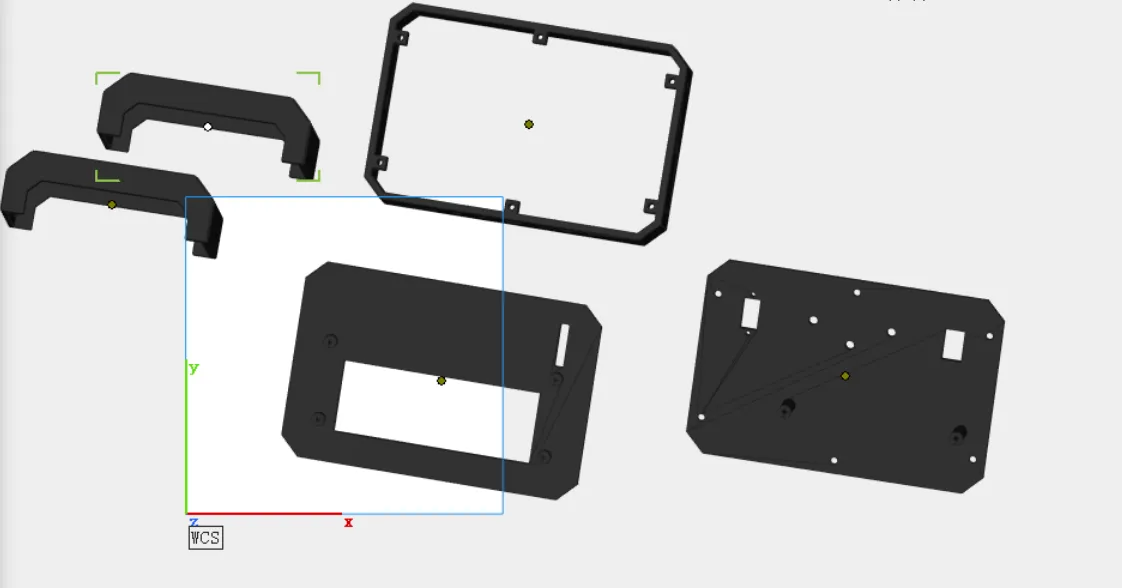
The weighbridge display housing is a critical component. It encloses:
- The digital display screen
- Control buttons and interface
- Electronic circuit boards and power supply
- Connectivity ports and wiring
Key design requirements included:
- Structural integrity: Must protect electronics from impacts and vibration in industrial environments
- Dimensional accuracy: Precise fit for display panel, buttons, and PCB mounting points
- Ergonomic design: Screen visibility and button accessibility for operators
- Heat dissipation: Adequate airflow for electronics cooling
- Chemical resistance: Protection against oils, dust, and cleaning agents common in weighbridge environments
Material Selection — PA12 Nylon
The housing was printed in PA12 nylon — a material widely used in SLS for functional prototypes and production parts.
Why PA12 for electronic enclosures:
| Property | Benefit for Enclosures |
| High strength and stiffness | Withstands mechanical stress and impacts |
| Excellent heat resistance | Maintains shape around heat-generating electronics |
| Superior dimensional stability | Ensures precise fit for display and components |
| Good chemical resistance | Protects against oils, solvents, and cleaning agents |
| Electrical insulation | Safe for electronic applications |
For demanding enclosures with high mechanical stress and thermal exposure, glass-filled PA12 provides enhanced stiffness and thermal stability.
Printing on the SLS3540 Pro
The SLS3540 Pro produced the display housing with key advantages:
- No support structures: Enabled complex internal features without post-processing
- Tight tolerances: Layer thickness of 0.06-0.3 mm achieved precise fit for display and buttons
- Crisp detailing: Sharp edges and clean internal geometries — hallmarks of high-quality SLS printing
- Fast turnaround: Compatible with 24-hour order turnaround for prototype runs
Results and Observations
The printed display housing demonstrated:
- Dimensional accuracy: All holes, slots, and alignment features were well-resolved, showing tight tolerances achievable with SLS
- Professional finish: The grainy matte texture characteristic of SLS parts gave the housing a ready-to-use appearance
- No warping or distortion: Confirming successful material selection and print parameters
- Structural integrity: The part displayed solid layer fusion suitable for functional testing
Why SLS for Electronic Enclosures?
SLS offers distinct advantages over traditional manufacturing methods and other 3D printing technologies for electronic enclosures.
No Tooling, Faster Iteration
Traditional injection molding requires expensive molds. A single mold can cost tens of thousands of dollars and take weeks to produce — making it uneconomical for low-volume production and prototyping.
SLS eliminates tooling entirely. Design changes can be implemented in CAD and printed the same day, compressing development cycles from weeks to days.
Complex Geometries Without Support
SLS uses a powder bed that naturally supports parts during printing. This enables geometries impossible with CNC machining or injection molding: internal channels, snap-fits, living hinges, and integrated mechanisms.
For electronic enclosures, this means:
- Integrated mounting points for PCBs
- Snap-fit closures without additional fasteners
- Ventilation slots and channels for heat dissipation
- Ergonomic grip textures on handheld devices
Durable Production-Grade Materials
SLS produces parts in engineering-grade nylons like PA12 and glass-filled PA12. These materials offer the strength, thermal stability, and chemical resistance required for functional parts — not just prototypes.
Low-to-Medium Volume Production
SLS is increasingly used for production, not just prototyping. A single SLS build can produce dozens of enclosures simultaneously, making it suitable for small-to-medium batch production where traditional tooling is uneconomical.
Real-World Applications in Electronics
SLS technology is already being used across the electronics industry for enclosures and housings.
Power Tool Enclosures
FacFox reported on a SLS-printed electric drill enclosure with ergonomic grip texture, internal ribs for reinforcement, and precision slots for electronics, switches, and screws. The rugged PA12 GF housing demonstrated solid layer fusion, crisp detailing, and clean internal geometries — hallmarks of high-quality SLS printing.
Motorsports Electronics
CRP USA partnered with DC Electronics to develop a 3D-printed electrical enclosure for NASCAR racecars using SLS and Windform composite materials. The component had to be lightweight, strong enough to resist damage during installation, handle heat dissipation from circuit boards, and be electrically non-conductive.
The solution proved lighter than both machined billet and carbon composite alternatives, with rapid delivery of production parts at a sensible price.
Industrial and Commercial Enclosures
According to industry sources, SLS technology is used to custom-build electronic module housings for various applications — from weighbridge displays to control panels. The technology enables rapid prototyping, low-volume production, and design flexibility that traditional methods cannot match.
Design Considerations for SLS Electronic Enclosures
Wall Thickness
For reliable SLS results, recommended minimum wall thickness is 0.7-1.0 mm for PA12. Features under 0.7 mm may be too fragile for post-processing like bead blasting. Living hinges can be as thin as 0.3 mm.
Holes and Channels
Minimum hole diameter is 1.0-1.5 mm. For powder removal from hollow sections, escape holes of 3.5-5.0 mm are recommended.
Tolerances
General tolerance for SLS is ±0.15mm of the part dimension, with a minimum of ±0.15 mm. The SLS3540 Pro achieves high precision with layer thickness as low as 0.06 mm.
Features for Electronics
- Snap-fits and clips: PA12’s toughness and elongation make it ideal for reliable latches and clips
- Threaded bosses: Can be printed directly without post-machining
- Internal ribs: Add structural support without increasing weight
- Grip textures: SLS can print ergonomic textures directly onto the enclosure surface
Frequently Asked Questions
What is the best 3D printing technology for electronic enclosures?
SLS offers the best balance of strength, surface finish, and design freedom for electronic enclosures. It handles snap-fits, threads, and thin walls without support structures. PA12 provides the durability and heat resistance required for functional parts.
Can SLS replace injection molding for electronic enclosures?
For low to medium volumes (under a few thousand units), yes. For mass production, injection molding remains more economical. The absence of tooling makes SLS ideal for prototyping, pilot runs, and low-volume production.
What materials are used for SLS electronic enclosures?
PA12 nylon is the most common material, offering toughness, heat resistance, and good surface finish. Glass-filled PA12 adds stiffness for demanding applications. TPU can be used for flexible protective features.
How does SLS compare to CNC machining for enclosures?
SLS eliminates machining costs, reduces material waste, and enables complex geometries. For low-volume production, SLS is often more cost-effective than CNC machining.
How accurate are SLS-printed enclosures?
Industrial SLS systems achieve ±0.15mm dimensional accuracy, with layer thickness down to 0.06 mm on the SLS3540 Pro. This ensures enclosures meet tight tolerances for display panels, buttons, and PCB fit.
Conclusion
SLS 3D printing is transforming electronic enclosure manufacturing by enabling durable, complex housings without tooling costs. The technology’s ability to produce functional, production-ready parts with consistent mechanical properties makes it valuable for:
- Functional prototypes that validate design and fit
- Low-volume production where tooling is uneconomical
- Custom enclosures for specialized applications
- Rapid iteration and design improvements
The Zongheng3D Supermaker SLS3540 Pro offers the precision, build volume, and material versatility required for electronic enclosure production. With its 350 x 350 x 400 mm build capacity,100W fiber laser, and support for engineering-grade nylon materials, it can handle both prototyping and small-batch production runs of display housings and other electronic components.