Eyewear is a unique product category. It is simultaneously a medical device, a fashion accessory, and a daily-wear item that must fit the human face with precision. For decades, the industry has relied on injection molding and acetate sheet cutting—methods that work well for mass production but struggle with customization, complex geometry, and material efficiency.
Selective Laser Sintering (SLS) is changing that equation. This industrial 3D printing technology is enabling eyewear brands and opticians to produce lightweight, durable frames with complex geometries, without the tooling costs and minimum order quantities that define traditional manufacturing.
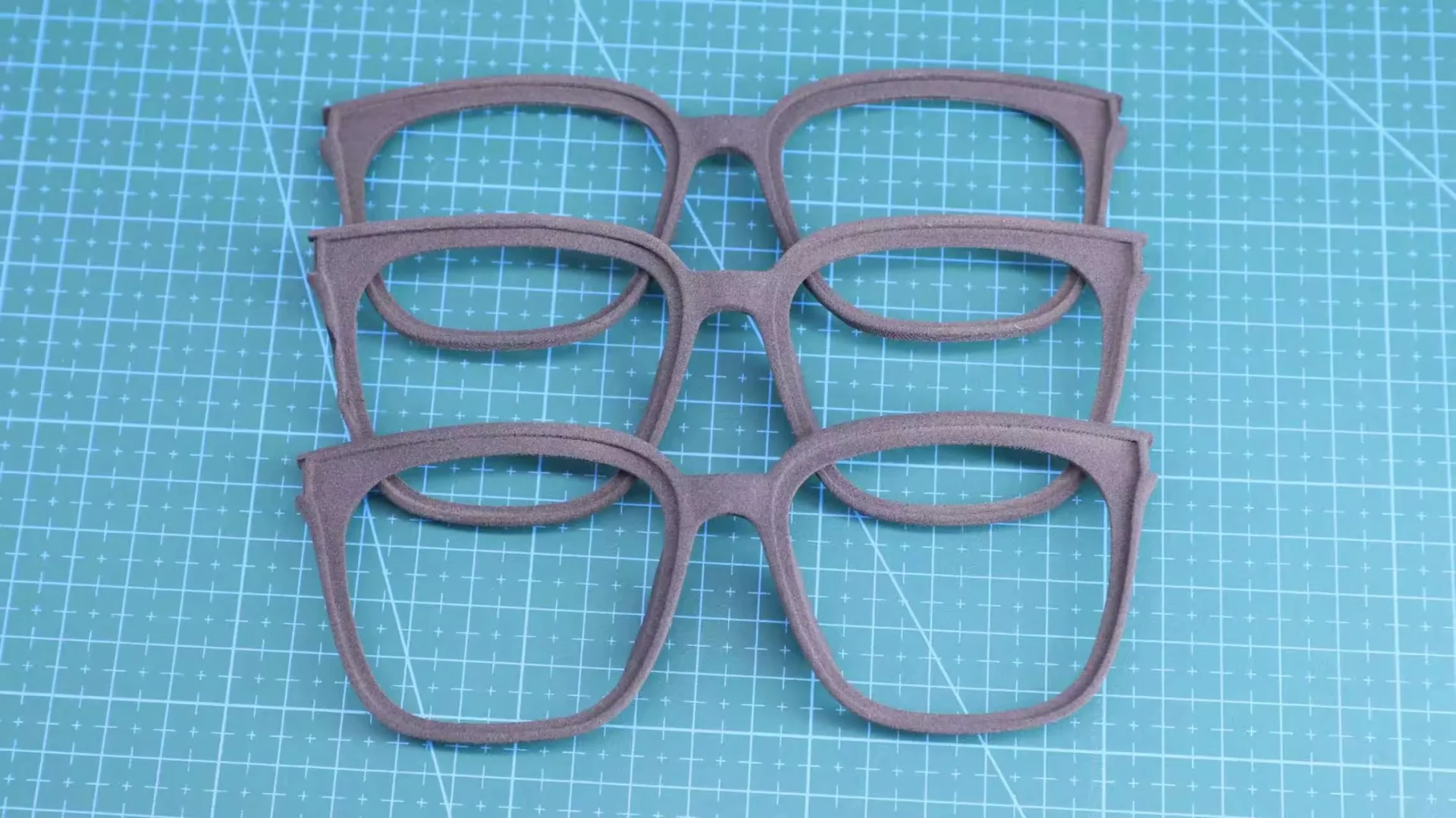
This article explores how SLS is being applied in the eyewear industry—from mass-customized frames to high-end fashion designs—and what makes it a compelling production technology for frame manufacturing.
Why SLS Is a Natural Fit for Eyewear Manufacturing
SLS offers several characteristics that align closely with eyewear requirements.
Support-Free Complex Geometry
Unlike FDM or SLA, SLS requires no support structures. The unsintered powder bed naturally supports the part during printing, enabling internal channels, undercuts, thin walls, and lattice structures without post-processing removal . For eyewear, this means designers can create organic shapes, integrated hinges, and complex temple geometries that would be impossible or prohibitively expensive with traditional molding.
Lightweight and Durable Parts
SLS-printed frames can be remarkably light. Using PA12 nylon, frames weighing as little as 5 grams have been produced, offering a near-weightless wearing experience . At the same time, SLS parts achieve mechanical properties approaching injection-molded components, with excellent fatigue resistance and impact strength.
No Tooling, No Minimum Order Quantity
Traditional eyewear manufacturing requires expensive molds and minimum order quantities of around 500 units per frame design . SLS eliminates tooling entirely. A single frame can be printed without additional setup cost, making true one-off customization economically viable.
Material Efficiency and Sustainability
Acetate sheet cutting generates significant waste—the material cut away from the frame shape is discarded. SLS is an additive process, and unused powder can be recycled and reused in subsequent builds, minimizing material waste . This aligns with growing consumer demand for sustainable products.
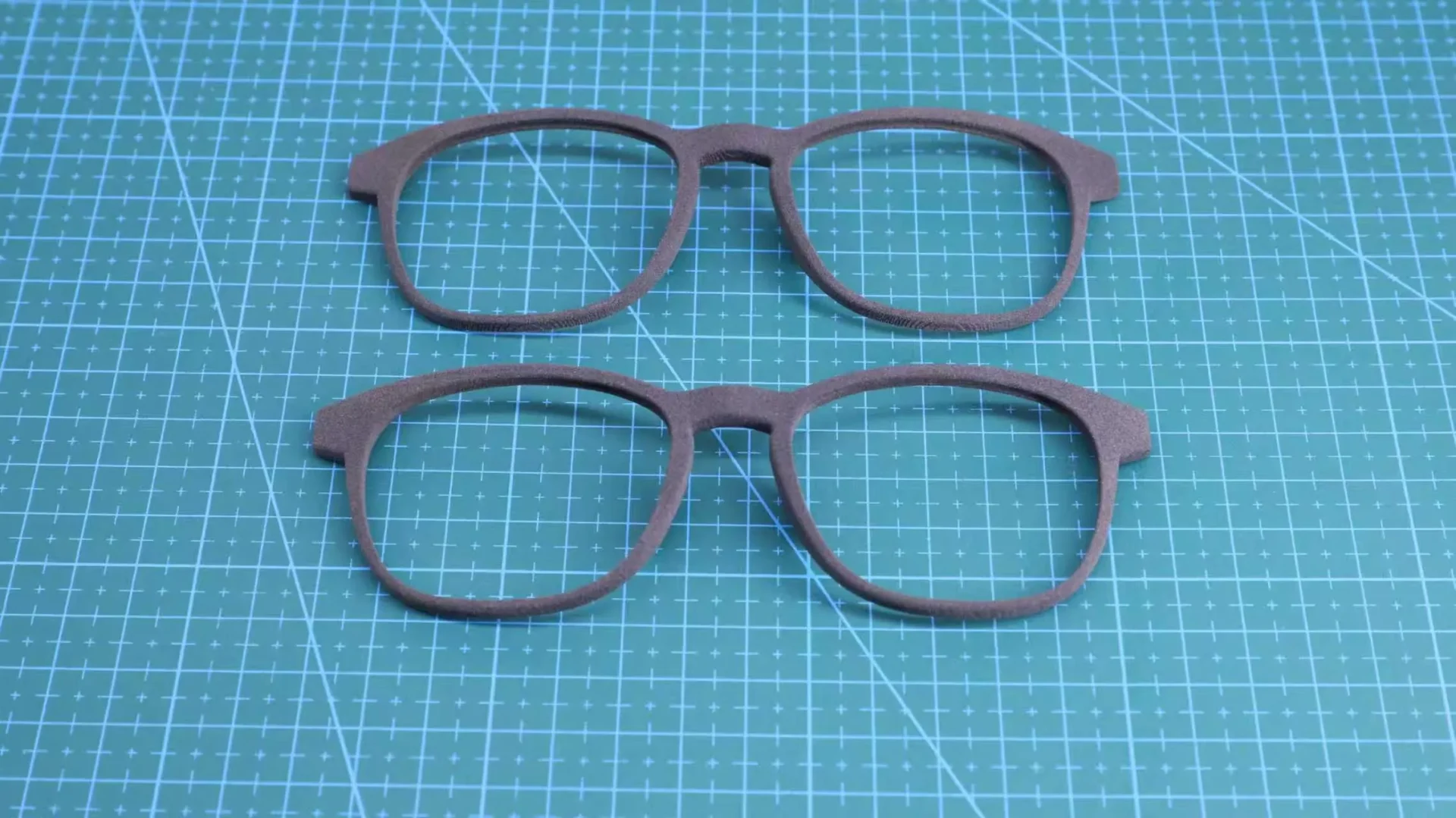
Applications of SLS in Eyewear
Mass Customization: The BRAGi Case Study
Chinese company BRAGi Optical Technology has built a business model around SLS mass customization. Using a scan-to-print workflow, opticians capture head shape data with a 3D scanner. The frame is then produced individually from that data using EOS FORMIGA P 110 Velocis systems and PA 2200 material .
The results are striking: over 30,000 pairs of custom glasses produced in just a few months, with short delivery times to customers across Asia and inquiries from Europe . The frames are produced in white nylon and finished with one of 14 colors during post-processing . As BRAGi’s designer noted, “The EOS system is superior to other manufacturers in terms of component quality and surface finish”
Fashion and Premium Design: MYKITA MYLON
Berlin-based eyewear brand MYKITA developed MYLON®, a proprietary material made from fine polyamide powder fused via SLS. MYLON® is 30% lighter than acetate, enabling voluminous frame designs that remain comfortable throughout the day .
The material also allows slender constructions and intricate details that are not possible with acetate. MYKITA’s focus on refining the laser-sintered surface—smoothing, coloring, and sealing—has created a product with “distinct visual and tactile appeal” The MYLON® collection includes optical frames, sunglasses, and hybrid designs combining stainless steel and 3D-printed components.
Custom Frames for Special Needs
SLS is also being used to create frames for individuals who cannot wear standard sizes. One study described 3D-printed spectacles designed for a 5-year-old patient with Goldenhar syndrome, using facial tomography to design a frame that would fit properly . This demonstrates the technology’s potential for medical and accessibility applications.
Integrated Hinges and Functional Features
A patent for one-piece eyewear describes 3D-printed frames with concealed hinges—B-spline curves that blend into the temple bars, allowing them to open and close while mimicking the rotational properties of traditional hinges . The entire frame, including hinges, is printed as a single construct, eliminating assembly steps and potential failure points.
Design and Production Considerations
Build Orientation and Surface Finish
Formlabs testing found that a 45-degree frame orientation in Nylon 11 or Nylon 12 Powder produces optimal aesthetic surface finish . The side of the part facing the bottom of the build chamber has a slightly smoother finish. At this orientation, 77 frames can fit in the Fuse 1+ 30W build chamber with an 11-hour print time.
Post-Processing for Consumer-Ready Finish
SLS parts have a matte, grainy surface as-printed. To achieve a finish comparable to acetate or TR90, post-processing is essential. Options include:
Vibratory tumbling: Ceramic or organic media can reduce surface roughness by over 80% in 8-24 hours
Dyeing: Water bath dyeing with Nylon 12 White Powder enables vibrant colors
Cerakote coating: A thin ceramic coating that improves chemical and scratch resistance and enables glossy finishes
Materials for Eyewear
PA12 and PA11 nylons are the most common SLS materials for eyewear. PA12 offers excellent strength, durability, and surface finish. PA11 provides slightly higher elongation and is bio-based in some formulations. Both materials are biocompatible and suitable for skin contact.
The SLS3540 Pro for Eyewear Production
The Zongheng3D Supermaker SLS3540 Pro is an industrial SLS printer well-suited for eyewear frame production.
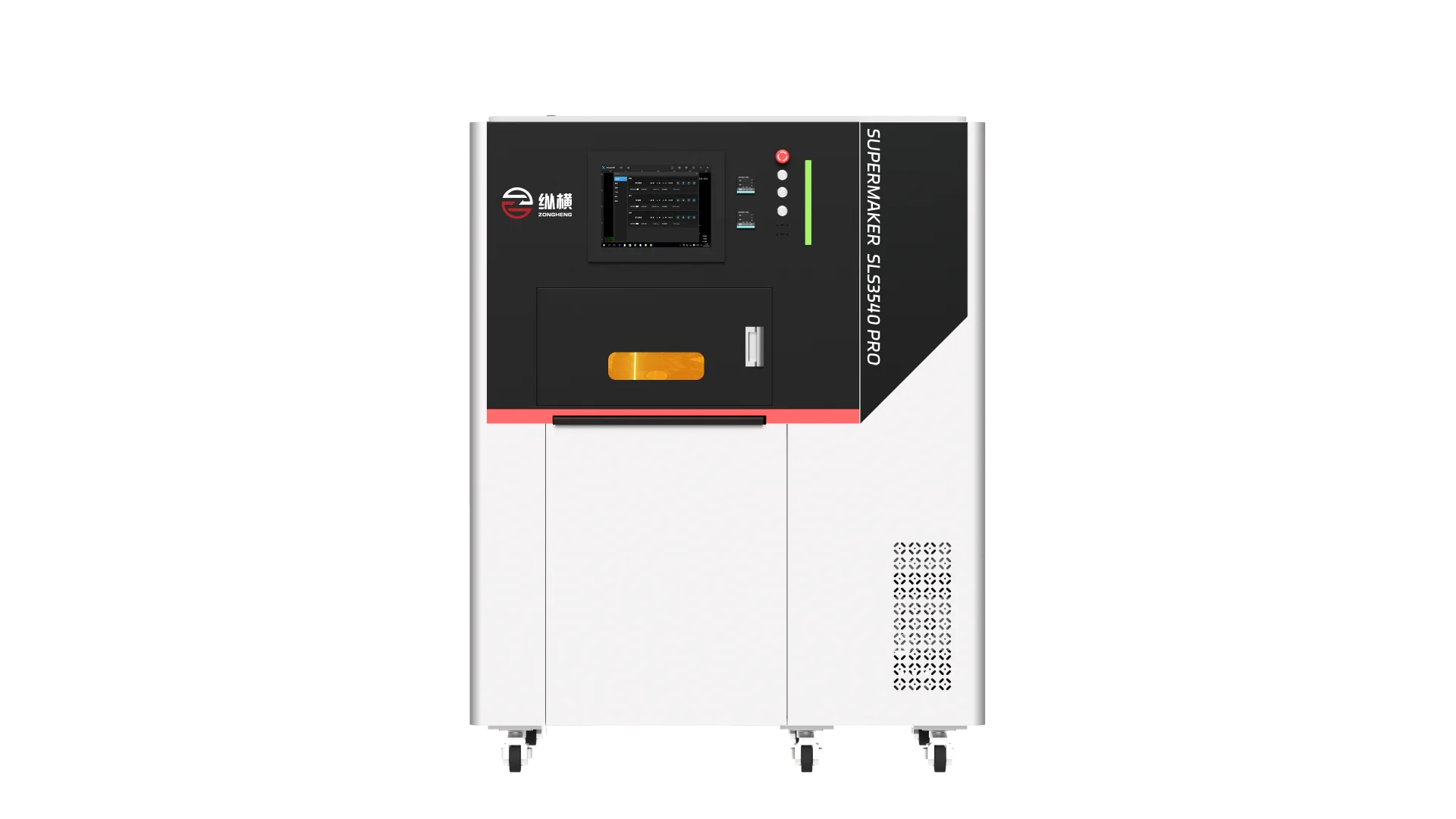
Why the SLS3540 Pro Excels for Eyewear
Large Build Volume: The 350 × 350 × 400 mm build capacity accommodates dozens of frames per build. This nesting capability reduces per-frame cost and enables production-scale throughput.
High Precision: Layer thickness as low as 0.06 mm ensures fine feature resolution for hinges, temples, and delicate geometries.
Support-Free Printing: Complex frame designs print without support structures, eliminating post-processing damage and enabling integrated features.
Material Versatility: The SLS3540 Pro supports PA12, PA11, and other engineering nylons suitable for eyewear applications.
Production-Ready Output: Parts from the SLS3540 Pro can serve as end-use consumer products, not just prototypes—valuable for brands moving from design to production.
Frequently Asked Questions
Can SLS-printed frames be as durable as acetate?
Yes. SLS-printed PA12 frames achieve mechanical properties approaching injection-molded components, with excellent fatigue resistance and impact strength . They are used in commercial production by brands like BRAGi and MYKITA.
How light can SLS eyewear frames be?
SLS-printed frames can weigh as little as 5 grams using PA12 material . MYKITA’s MYLON® is 30% lighter than acetate.
Can SLS frames be customized for individual face shapes?
Yes. A 3D scan of the head captures facial geometry, which is used to create a digital model for printing. This enables precise fit without standard sizing limitations.
What post-processing is needed for SLS eyewear?
Frames typically require bead-blasting or vibratory tumbling to smooth the surface, followed by optional dyeing or coating for color and finish.
Is SLS cost-effective for low-volume eyewear production?
Yes. SLS eliminates tooling costs and minimum order quantities, making one-off and small-batch production economically viable. This is particularly valuable for custom frames and niche designs.
Conclusion
SLS 3D printing is transforming eyewear manufacturing by enabling lightweight, durable, and complex frames without the tooling costs and production constraints of traditional methods. From BRAGi’s mass-customized frames to MYKITA’s award-winning MYLON® material, SLS is proving itself as a production-ready technology for the eyewear industry.
The Zongheng3D SLS3540Pro offers the precision, build volume, and material versatility required for eyewear frame production. With its 350 × 350 × 400 mm build capacity, 50W fiber laser, and support for engineering-grade nylon materials, it can handle both prototyping and production runs of custom and standard frames.